
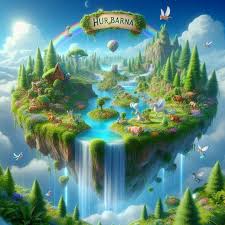
The word hurbarna is not a term that appears in common dictionaries, yet it carries a sense of mystery and depth that invites exploration. When we hear “hurbarna,” it feels like a word born from cultural memory, an echo of traditions, or perhaps even a term rooted in local dialects or ancient practices. Some words exist not because they are widely known but because they embody layers of history, identity, and imagination. Hurbarna, in this sense, can serve as a bridge between past and present, between the way humans once understood their environment and the way modern people search for meaning in a rapidly changing world.
This article will explore hurbarna from multiple angles: its possible linguistic origins, its cultural symbolism, its relationship to nature and tradition, and its relevance in today’s digital and globalized societies. By looking at hurbarna not only as a word but as a concept, we can uncover insights about heritage, memory, and the human desire to connect with something deeper than surface-level communication.
1. Linguistic Origins of Hurbarna
Language is one of humanity’s most powerful tools, and every word reflects a history of usage, transformation, and cultural significance. Though hurbarna may not appear in standard lexicons, its structure feels familiar, resembling words found in Scandinavian, Eastern European, or even regional folk languages. The suffix “-arna” suggests plurality or belonging, which could indicate that hurbarna refers to a group, a tradition, or a collective identity.
Linguistically, such words often emerge from oral traditions, passed down from generation to generation before being written. The sound of hurbarna might evoke old chants, folk songs, or names of communities tied to nature. If we consider this perspective, hurbarna could signify not just a word but a repository of collective memory—something preserved in sound and meaning long before written language formalized it. This shows how words are more than definitions; they are living artifacts of human experience.
2. Hurbarna and Its Connection to Nature
Many mysterious or folkloric words are deeply tied to nature. Hurbarna could be imagined as a term for forests, plants, or healing traditions. The phonetic rhythm of the word suggests something organic, perhaps connected to herbs, roots, or natural cycles. In many ancient cultures, communities used special words to refer to sacred groves, healing plants, or seasonal rituals. Hurbarna could embody this ecological connection, symbolizing humanity’s interdependence with the natural environment.
If we interpret hurbarna in this way, it reminds us of the importance of ecology and sustainability. Modern societies often disconnect from nature, yet words like hurbarna draw us back to traditions where every tree, river, and mountain carried meaning. In this sense, hurbarna is not only about language—it is about remembering that humanity is part of an ecosystem, not separate from it.
3. Hurbarna in Folklore and Cultural Memory
Folklore preserves stories that shape cultural identity. Hurbarna, whether as a real or symbolic word, could easily belong to this domain. Many cultures give unique names to mythical beings, ancestral spirits, or collective practices. Perhaps hurbarna refers to a group of guardians in mythology, or to a festival that celebrated fertility, harvest, or renewal.
Folkloric words like this often hold moral lessons. They connect communities to their ancestors, transmitting wisdom through symbols rather than abstract theories. Hurbarna could represent courage, resilience, or unity—a reminder that culture is not just about survival but about meaning. Whether told through songs, rituals, or fireside storytelling, hurbarna would function as an anchor for collective memory.
4. Psychological Meaning of Hurbarna
Beyond folklore and nature, hurbarna can also be understood through psychology. Words often carry emotional resonance that shapes the way people think and feel. The sound and rhythm of hurbarna has a soothing, almost meditative quality, which suggests that it could represent inner balance, mindfulness, or emotional healing.
Psychologists often note that humans need symbols and metaphors to process complex experiences. Hurbarna, as a symbolic term, could reflect the part of the psyche that seeks wholeness and connection. In this sense, the word functions like a mandala or a mantra—something repeated to bring calm and meaning. It suggests that language is not only a tool for communication but also a medicine for the soul.
5. Hurbarna as a Cultural Metaphor in Modern Times
In today’s digital age, where speed and technology dominate, the concept of hurbarna becomes even more relevant. Modern people often search for grounding—something to remind them of roots, authenticity, and continuity. Hurbarna could serve as a metaphor for this search. It might symbolize cultural resilience, the preservation of tradition in the face of globalization, or the blending of old and new.
Digital culture has a tendency to flatten diversity, turning everything into simplified content. But hurbarna, as a complex and mysterious term, resists simplification. It reminds us that culture is not always fully translatable, that some things carry meaning precisely because they remain partly hidden. In this sense, hurbarna could represent the richness of diversity in a world that sometimes forgets the value of difference.
6. Social Dimensions of Hurbarna: Community and Belonging
Another way to understand hurbarna is as a concept of community. Many societies use words to describe collective identities—terms that emphasize unity rather than individuality. Hurbarna could describe a village, a kinship group, or a circle of friends bound by shared values. It might symbolize the social glue that keeps communities together.
In the modern world, where individualism often dominates, remembering the importance of community is essential. Hurbarna might therefore serve as a reminder of solidarity, cooperation, and belonging. Social scientists argue that humans thrive not in isolation but in networks of mutual support. If hurbarna represents such networks, it becomes a word that expresses what it means to live fully human lives in connection with others.
7. The Future of Hurbarna: Preserving Meaning in a Globalized World
As cultures evolve, words like hurbarna face the risk of being forgotten. Yet they also carry the potential for renewal. In the global age, where languages and traditions mix, hurbarna could become a symbol of resilience—a reminder that even in the face of homogenization, cultural uniqueness survives.
The future of hurbarna may lie in education, storytelling, and digital preservation. Just as ancient texts and myths are digitized and shared worldwide, so too can words like hurbarna find new life in literature, film, or online communities. They can inspire new generations to see the value of tradition while embracing innovation. Hurbarna thus embodies continuity, urging us to carry heritage forward without losing the vitality of the present.
FAQs about Hurbarna
Q1. What does hurbarna mean?
Hurbarna does not have a fixed dictionary meaning, but it can be interpreted as a cultural, natural, or symbolic term tied to heritage, identity, and community.
Q2. Is hurbarna a real word from a specific culture?
It resembles linguistic patterns from European and folkloric traditions, but in this exploration it serves more as a metaphorical and cultural symbol than a strictly defined word.
Q3. Why is hurbarna important to study?
It highlights how language preserves memory, connects humans to nature, and provides cultural meaning in a fast-changing digital age.
Q4. How can hurbarna be applied today?
Hurbarna can be seen as a metaphor for grounding, community, and resilience. It inspires reflection on tradition, ecology, and human connection.
Q5. What does hurbarna teach us about language?
It reminds us that words are not only practical but also symbolic. They carry emotional, cultural, and psychological weight beyond literal definitions.
Conclusion
The journey into the meaning of hurbarna shows us that language is more than communication—it is culture, identity, and connection. Whether seen as a folkloric echo, a connection to nature, a psychological metaphor, or a symbol of community, hurbarna embodies vitality. It represents the need for humans to remember where they come from, to value their roots, and to seek belonging in a fragmented world.
In the modern era, where information is abundant but meaning can feel scarce, words like hurbarna remind us of the deeper layers of existence. They show that tradition and modernity are not opposites but partners, that culture evolves while still carrying echoes of the past. Hurbarna is therefore not just a word—it is a symbol of resilience, grounding, and continuity.
As we look to the future, embracing hurbarna means embracing the richness of diversity, the wisdom of heritage, and the strength of community. It means honoring the vitality that keeps culture alive, even in the face of change.
