
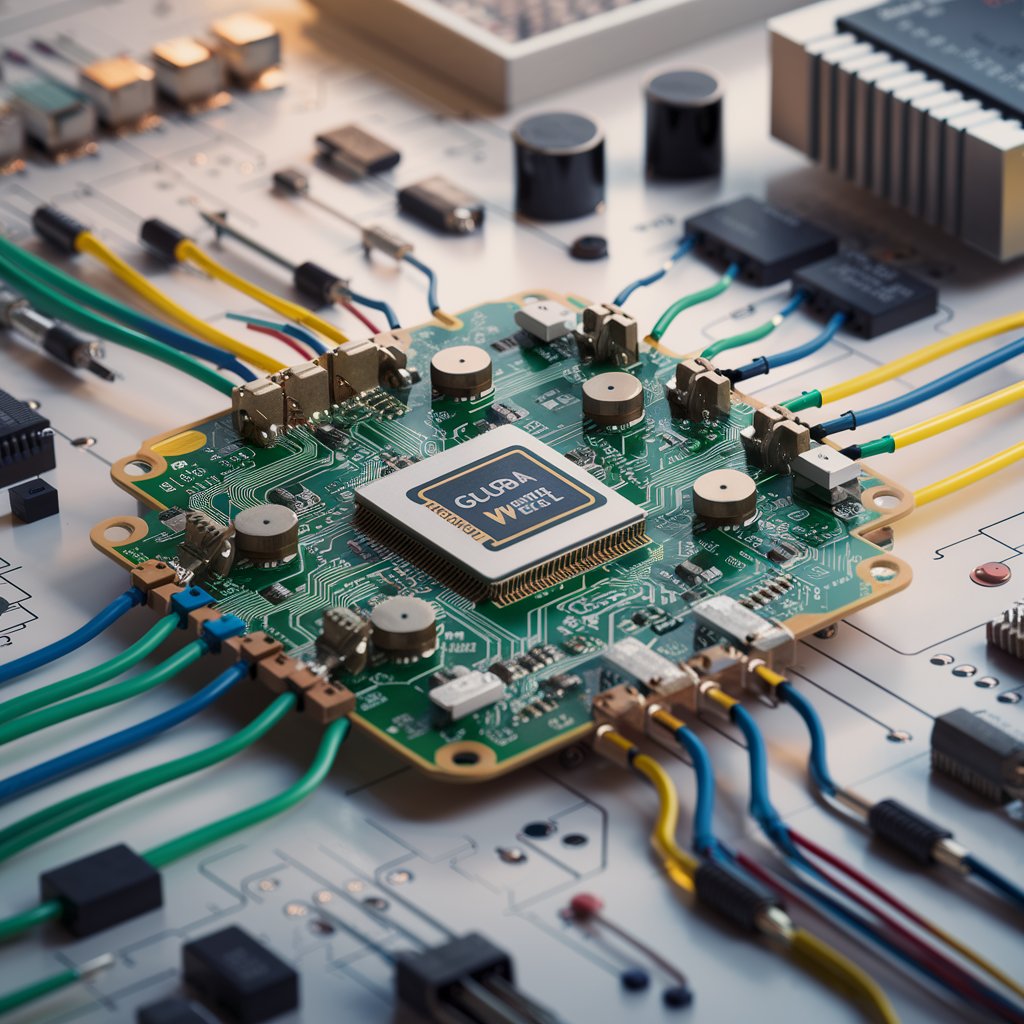
In the relentless march of technological progress, where devices become smarter, faster, and more integral to our lives, a silent enabler works beneath the surface: the Printed Circuit Board (PCB). More than just a platform for components, today’s PCBs are highly engineered solutions that define the capabilities of the final product. For industries operating at the cutting edge, like telecommunications and advanced robotics, the choice of PCB fabrication and assembly partner is not merely a procurement decision—it is a strategic one.
This is where technical expertise and advanced manufacturing capabilities become paramount. Companies like Global Well PCBA, a China-based manufacturer with a strong international focus, exemplify how specialized PCB solutions are directly answering the complex demands of these dynamic sectors.
The Technical Edge: Beyond Standard FR-4
While standard PCBs serve countless applications, frontier industries require materials and designs that push the boundaries. Two areas of advanced PCB technology are particularly transformative:
- High-Frequency/RF PCBs: The telecommunications boom, from 5G base stations to satellite communications, hinges on the ability to transmit data at incredibly high speeds and frequencies. Standard PCB materials introduce significant signal loss and distortion at these ranges. High-frequency PCBs use specialized substrates like PTFE (Teflon) or ceramic-filled hydrocarbons. These materials offer a stable dielectric constant, low dissipation factor, and excellent thermal management. For a manufacturer, expertise in processing these often-challenging materials—ensuring precise impedance control and minimal signal integrity loss—is non-negotiable. This technical mastery directly translates to more reliable, longer-range, and higher-bandwidth communication devices.
- Rigid-Flex PCBs: In robotics, medical devices, and compact consumer electronics, the conflict between space, weight, and reliability is constant. Rigid-flex PCBs provide an elegant solution by integrating rigid boards for component support with flexible circuit sections that can bend and fold. This eliminates connectors and cables between board segments—common points of failure—resulting in:
- Enhanced reliability and durability under continuous movement (crucial for robotic joints or drone mechanisms).
- Significant savings in space and weight.
- Streamlined assembly and reduced overall system cost.
The fabrication of rigid-flex circuits is an art form in itself, requiring deep knowledge of material lamination, precise flex layer etching, and meticulous handling to avoid stress points.
The Synergy of Fabrication and Assembly
Advanced PCBs are only as good as the components mounted on them. This is where Design for Manufacturability (DFM) and precise assembly come into play. A skilled PCBA partner does not operate in silos. From the initial design review, they collaborate to optimize the layout for both fabrication yield and assembly efficiency.
- For High-Frequency PCBs: This means advising on component placement to minimize trace length and interference, and selecting solder masks that are compatible with RF performance.
- For Rigid-Flex PCBs: It involves defining optimal bend radii in the flex areas and ensuring components are placed only on rigid sections unless using specialized flexible adhesives.
A full-service manufacturer that controls both the fabrication and assembly processes, like Global Well PCBA, ensures this synergy. They manage the entire workflow from sourcing reliable electronic components (including difficult-to-find parts) through to sophisticated assembly techniques like Ball Grid Array (BGA) reflow and rigorous testing (AOI, X-Ray, functional testing). This vertical integration guarantees quality, reduces lead times, and provides a single point of accountability.
Conclusion: Partnering for Peak Performance
The evolution of telecommunications, robotics, and IoT is intrinsically linked to the evolution of PCB technology. Selecting a manufacturing partner is about more than finding a vendor; it’s about aligning with an engineering resource. Success in these fields demands access to advanced solutions—High-Frequency PCBs for flawless signal transmission and Rigid-Flex PCBs for robust, compact designs—coupled with the technical support to implement them effectively.
Manufacturers that offer this combination of advanced capabilities, end-to-end service (from PCB fabrication to turnkey PCBA), and clear communication (as evidenced by multilingual resources like the Global Well PCBA website available in English) position themselves as critical partners in the global innovation ecosystem. For engineers and procurement specialists designing the next breakthrough, the question is not just “who can build my board?” but “who can help me build it better, smarter, and more reliably?” The answer lies in partners who speak the language of both advanced materials and practical, high-volume manufacturing excellence.
